

Which Side of the Iguazu Falls Is Better?
Brazil gives you the panorama, Argentina puts you inside it. Which one is right depends on how much time you have — and where you are starting from.
The short answer
Brazil for the View, Argentina for the Time You Have
If you only have one day, go to the Brazilian side. If you have two, do both — Brazil first.
The Iguazu Falls sit on the border between Brazil and Argentina, and the two countries do not show you the same thing. Roughly 80% of the 275 individual falls are on the Argentinian side, which is why Argentina has more trails and needs a full day. But standing among them means you rarely see the whole set at once.
Brazil holds about 20% and looks across at the rest. That is the postcard: the entire amphitheatre in one frame. It takes three to four hours and it is the side that works as a day trip.
The order matters too. Most people who do both prefer Brazil first for the overview, Argentina second for the detail. Doing it the other way round makes the Brazilian side feel like a summary of something you already saw.
Side by side
The Full Comparison
Twelve things people actually decide on, with no marketing on either column.
| Brazilian side (Foz do Iguaçu) | Argentinian side (Puerto Iguazú) | |
|---|---|---|
| The view | Panoramic — the full amphitheatre in one frame | Immersive — walkways above and beside the water |
| Share of the falls | About 20% | About 80% |
| Time needed | 3–4 hours | A full day |
| Walking | One main trail, roughly 1.5 km, paved and easy | Upper, Lower and Devil’s Throat circuits, plus a park train |
| Devil’s Throat | Seen from across, at a distance | Seen from directly above, at the edge |
| Getting wet | Spray on the lower platform | Guaranteed on the Lower Circuit and the boat ride |
| Accessibility | Easier — mostly flat, wheelchair-friendly | More stairs and longer distances |
| Best light | Morning | Late morning to early afternoon |
| Boat ride | Macuco Safari | Gran Aventura |
| Helicopter flights | Yes, from Foz do Iguaçu | Not permitted |
| Bird park nearby | Parque das Aves, next to the entrance | No equivalent |
| Day trip from Asunción? | Yes | No — needs an overnight stay |
Practical details
Hours, Tickets and Documents
Both parks are open 365 days a year. These are the park operators’ own numbers, not ours.
| Brazilian park hours | 9:00 AM–4:00 PM Mon–Fri, 8:30 AM–4:00 PM weekends. Stay until 5:30 PM |
| Brazilian entrance | R$131 foreign visitors, R$118 Brazil and Mercosur, free under 6 (early 2026) |
| Two countries, two parks | Separate tickets. Visiting both means crossing an international border |
| Documents | Valid passport. Some nationalities need a visa for Brazil, Argentina or both |
| Currency | Reais on the Brazilian side, pesos on the Argentinian. Cards work at both gates |
| UNESCO | Both parks are World Heritage Sites — Argentina since 1984, Brazil since 1986 |
Paraguay is a Mercosur member, so Paraguayan passport holders pay the lower Brazilian rate. The full route from the Paraguayan capital is broken down in our Asunción–Foz do Iguaçu distance guide.
Coming from Asunción
Why Distance Decides It for You
If you are starting in Paraguay, the choice is mostly made for you by the clock.
Asunción is about 330 km from the Brazilian side, five to six hours of driving each way including the border. Leaving at 3 AM puts you at the gate when the park opens, gives you the whole morning, and gets you back the same night.
The Argentinian side is a further crossing and a full day of its own. Trying to fit both into one day from Asunción means rushing both parks and spending most of the daylight at border posts. It is the single most common mistake people make with this trip.
If you have one day: Brazilian side, and you will not feel short-changed — it is the view everyone pictures.
If you have two: take a one-way transfer to Foz do Iguaçu, do Brazil that afternoon and Argentina the next day, and we collect you when you are done.
Tell us your dates and we plan the version that fits.
The trip
How We Run It
A private vehicle and driver, hotel to hotel, built around the 9 AM opening.
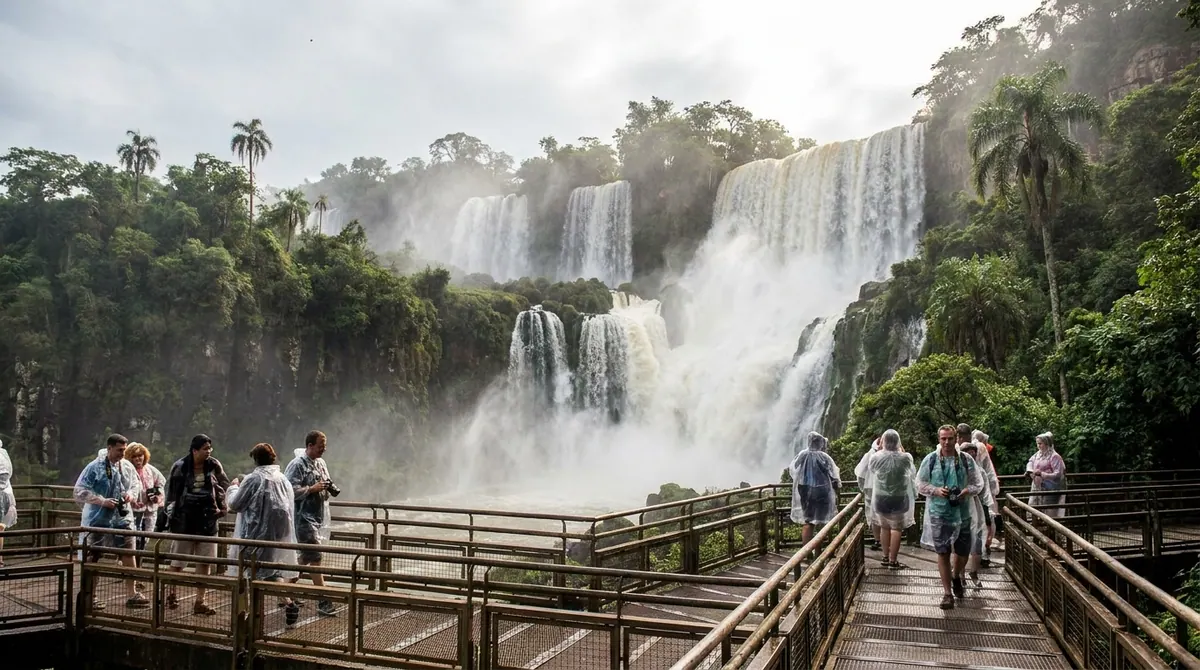
Our Iguazu Falls day tour from Asunción goes to the Brazilian side, from USD 697 per vehicle for up to three passengers. If you want both sides, we arrange the one-way transfer to Foz do Iguaçu and the return whenever suits you.
Mistakes to avoid
Four Things People Get Wrong
The errors that turn a great day into a rushed one.
- 1
Trying to do both sides in one day
Two parks, two countries, one border crossing in the middle. You end up seeing half of each and queueing for the rest.
- 2
Arriving after midday
The Brazilian trail is busiest and hottest from noon, and the light flattens. The first two hours after opening are a different park.
- 3
Leaving the passport behind
Both sides mean an international border. A national ID is not enough for most nationalities, and children need their own documents.
- 4
Not budgeting for the entrance
The park ticket is separate from any tour price, on both sides, and is paid at the gate in local currency or by card.
FAQ
Frequently Asked Questions
The questions people ask before choosing a side.
Which side of the Iguazu Falls is better, Brazil or Argentina?
Neither is objectively better — they show different things. The Brazilian side gives the panoramic view of the whole set of falls and takes three to four hours. The Argentinian side holds about 80% of the falls and puts you on walkways right at the edge, but it needs a full day. If you only have one day, choose Brazil. If you have two, do both, starting with Brazil.
How much of the Iguazu Falls is in Brazil and how much in Argentina?
Roughly 20% of the 275 individual falls are on the Brazilian side and about 80% on the Argentinian side. That split is exactly why the two experiences differ: Argentina has more waterfalls to walk among, while Brazil looks across at them and sees the whole formation at once.
Can you visit both sides in one day?
It is technically possible if you are already staying in Foz do Iguaçu or Puerto Iguazú, but it means rushing both parks and crossing an international border in the middle of the day. From Asunción it is not realistic — the drive alone is five to six hours each way. Two days is the honest minimum for both sides.
Which side should I visit first?
Brazil first. The panoramic view gives you the shape of the whole thing, and the Argentinian walkways then fill in the detail. Doing it the other way round tends to make the Brazilian side feel like a recap of what you already saw up close.
Do I need a passport to visit both sides?
Yes. The two parks are in different countries and visiting both means an international border crossing. Bring a valid passport, and check whether your nationality needs a visa for Brazil, Argentina or both — the requirements are not the same for the two countries.
How much does it cost to enter the Brazilian side?
As of early 2026, Iguaçu National Park charges R$131 for foreign visitors and R$118 for Brazilian and Mercosur nationals, with free entry for children under six. Paraguay is a Mercosur member, so Paraguayan passport holders pay the lower rate. The ticket is paid at the gate in reais or by card.
Which side is better for photographs?
The Brazilian side, for the wide shots — it is the only place you can frame the entire amphitheatre. The Argentinian side is better for close-ups and for the Devil's Throat seen from directly above. Morning light favours Brazil; late morning favours Argentina.
Which side is more accessible?
The Brazilian side. Its main trail is largely flat and paved, and much of it is manageable in a wheelchair. The Argentinian side has more stairs, longer distances and several separate circuits, though the park train helps with the longest stretch.
Is the boat ride worth it, and which side has it?
Both sides run one — Macuco Safari in Brazil, Gran Aventura in Argentina. They take you under the falls and you will get completely soaked, so bring a change of clothes. Neither is included in our tour price; you book it at the park if you want it.
Can you take a helicopter over the falls?
Only from the Brazilian side, out of Foz do Iguaçu. Argentina does not permit overflights of its park. The flight lasts about ten minutes and is booked separately at the heliport.
Which side do you go to from Asunción?
The Brazilian side. It is the one that fits in a single day from Asunción: 330 km each way, arriving as the park opens at 9 AM and back in Asunción the same night. For the Argentinian side we arrange a one-way transfer and collect you after your stay.
What is the best time of year to go?
Both parks are open every day of the year. December to March brings the highest water volume along with heat and humidity. April to June and August to October offer the best balance of comfortable weather, strong flow and thinner crowds. January and July are busiest because of school holidays in Brazil and Argentina.
Ready to See Them?
Tell us your dates and how many of you are travelling, and we will plan the version that fits the time you have.
Private tour · hotel pickup · 30% deposit, the rest on the day.
See the full Iguazu Falls day tour from Asunción or our private transfers in Asunción.